The Edo State Internal Revenue Service (EIRS) has introduced a USSD code to simplify tax compliance and Tax…The Edo State Internal Revenue Service (EIRS) has introduced a USSD code to simplify tax compliance and Tax…

Edo State unveils USSD code to simplify Tax ID registration, boost compliance

2025/12/05 16:30

The Edo State Internal Revenue Service (EIRS) has introduced a USSD code to simplify tax compliance and Tax ID registration for residents across the state. The initiative is part of its preparation ahead of the nationwide implementation of the new Nigerian Tax Acts by January 1 2026.

Head of Corporate Communications at EIRS, Courage Eboigbe, on Thursday, explained that the latest development will promote inclusivity and ensure compliance with tax filing come 2026. He added that the initiative will broaden participation in the formal economy and enhance the ease of doing business.

The USSD code is a joint rollout by the Edo State Internal Revenue Service and the Joint Tax Board (JTB). 

By dialling *668# on their mobile devices, Edo State residents can access instant Tax ID registration at a service cost of N20. Other features under the service are verification and certificate generation. 
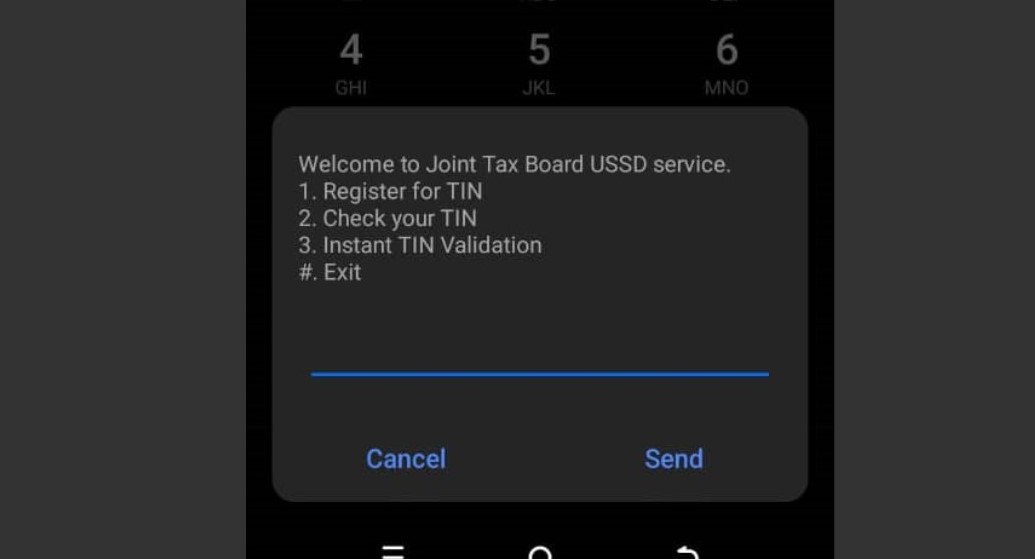
Tax ID USSD CodeTax ID USSD dial

However, checks show that the USSD code can be accessed nationwide by Nigerians, regardless of their state of residence. 

Also Read: How to get a Nigerian Tax ID before Jan. 2026 deadline for bank account holders.

This isn’t the first USSD code initiative that helps simplify tax compliance. Last year, the Federal Inland Revenue Service (FIRS) launched a USSD code that gives taxpayers access to relevant information. 

The USSD Code, *829#, makes Nigeria one of the 6 African countries with a USSD code for Tax collection and other related matters. 

The code, at a service cost of N100, enables taxpayers to retrieve their Tax ID, verify their Tax Clearance Certificates (TCC), obtain information on tax types and rates, get answers to any tax-related inquiries and locate the nearest FIRS office.
Edo State IRS

Tax ID registration centres 

The Edo Internal Revenue Service also unveiled 14 new centres for Tax ID registration across the state as part of efforts to decentralise the process. In addition, the project seeks to bring the agency’s services closer to citizens.

The new centres are located in all zonal tax offices across the state, including Oredo, Egor, Ikpoba-Okha, Uhunmwonde, Ovia North-East and Orhionmwon. They are also situated in Ovia South-West, Esan West, Esan North-East, Akoko-Edo, Etsako East, Etsako West and Owan East.

Eboigbe stressed that the move was a strategic effort to facilitate tax compliance by taxpayers in preparation for the new tax laws in 2026.

These initiatives ensure that citizens and potential taxpayers, especially those in rural and diaspora communities, can obtain their Tax ID conveniently,” he said.
Tax ID

Aside from the USSD code and physical location, Nigerians can confirm existing TINs or register anew by visiting the JTB portal at tin.jtb.gov.ng. Further enquiries are to be directed to 08130970146 or info@eirs.gov.ng.

Disclaimer: The articles reposted on this site are sourced from public platforms and are provided for informational purposes only. They do not necessarily reflect the views of MEXC. All rights remain with the original authors. If you believe any content infringes on third-party rights, please contact service@support.mexc.com for removal. MEXC makes no guarantees regarding the accuracy, completeness, or timeliness of the content and is not responsible for any actions taken based on the information provided. The content does not constitute financial, legal, or other professional advice, nor should it be considered a recommendation or endorsement by MEXC.

You May Also Like

Tokenized Assets Shift From Wrappers to Building Blocks in DeFi
Tokenized Assets Shift From Wrappers to Building Blocks in DeFi

The post Tokenized Assets Shift From Wrappers to Building Blocks in DeFi appeared on BitcoinEthereumNews.com. RWAs are rapidly moving on-chain, unlocking new opportunities for investors and DeFi protocols, according to a new report from Dune and RWAxyz. Tokenized real-world assets (RWAs) are moving beyond digital versions of traditional securities to become key building blocks of decentralized finance (DeFi), according to the 2025 RWA Report from Dune and RWAxyz. The report notes that Treasuries, bonds, credit, and equities are now being used in DeFi as collateral, trading instruments, and yield products. This marks tokenization’s “real breakthrough” – composability, or the ability to combine and reuse assets across different protocols. Projects are already showing how this works in practice. Asset manager Maple Finance’s syrupUSDC, for example, has grown to $2.5 billion, with more than 30% placed in DeFi apps like Spark ($570 million). Centrifuge’s new deJAAA token, a wrapper for Janus Henderson’s AAA CLO fund, is already trading on Aerodrome, Coinbase and other exchanges, with Stellar planned next. Meanwhile, Aave’s Horizon RWA Market now lets institutional users post tokenized Treasuries and CLOs as collateral. This trend underscores a bigger shift: RWAs are no longer just copies of traditional assets; instead, they are becoming core parts of on-chain finance, powering lending, liquidity, and yield, and helping to close the gap between traditional finance (TradFi) and DeFi. “RWAs have crossed the chasm from experimentation to execution,” Sid Powell, CEO of Maple Finance, says in the report. “Our growth to $3.5B AUM reflects a broader shift: traditional financial services are adopting crypto assets while institutions seek exposure to on-chain markets.” Investor demand for higher returns and more diversified options is mainly driving this growth. Tokenized Treasuries proved there is strong demand, with $7.3 billion issued by September 2025 – up 85% year-to-date. The growth was led by BlackRock, WisdomTree, Ondo, and Centrifuge’s JTRSY (Janus Henderson Anemoy Treasury Fund). Spark’s $1…
Share
BitcoinEthereumNews2025/09/18 06:10