The post As Ukraine War Nears Its End, Europe Faces Strategic Security Dilemma appeared on BitcoinEthereumNews.com. WASHINGTON, DC – AUGUST 18: (L-R) Finnish President Alexander Stubb, Ukrainian President Volodymyr Zelensky, U.S. President Donald Trump, French President Emmanuel Macron, Italian Prime Minister Giorgia Meloni, German Chancellor Friedrich Merz, and NATO Secretary General Mark Rutte prepare to depart after a group photo prior to meeting at the White House on August 18, 2025 in Washington, DC. President Trump hosted President Zelensky at the White House for a bilateral meeting and an expanded meeting with European leaders to discuss a peace deal between Russia and Ukraine. (Photo by Win McNamee/Getty Images) Getty Images The Ukraine war has reached the limits of what continued fighting can realistically achieve for any of the belligerents. All four principals – the United States, Russia, Ukraine, and the Europeans – have long understood that the conflict’s underlying geopolitical realities would eventually force a negotiated settlement. The question now is no longer whether diplomacy will take over, but when the parties can align their domestic constraints and strategic imperatives to engineer a deal. Yet even a cessation of hostilities will leave unresolved the deeper question of Europe’s long-term security architecture, which the war has exposed and whose conclusion will transform. Axios reported late Nov 30 that senior U.S. and Ukrainian officials engaged in five hours of “difficult” and “intense” negotiations on the de facto border with Russia, reflecting the strategic reality that Ukraine could not reclaim lost territories and Russia found further gains prohibitively costly, making it inevitable that a line be drawn roughly along the positions both sides have held for some time. The U.S. delegation, led by Special Envoy Steve Witkoff, Secretary of State Marco Rubio, and adviser Jared Kushner, met with Ukraine’s national security adviser Rustem Umerov, military chief of staff Gen. Andrii Hnatov, and deputy head of military intelligence Vadym Skibitskyi.… The post As Ukraine War Nears Its End, Europe Faces Strategic Security Dilemma appeared on BitcoinEthereumNews.com. WASHINGTON, DC – AUGUST 18: (L-R) Finnish President Alexander Stubb, Ukrainian President Volodymyr Zelensky, U.S. President Donald Trump, French President Emmanuel Macron, Italian Prime Minister Giorgia Meloni, German Chancellor Friedrich Merz, and NATO Secretary General Mark Rutte prepare to depart after a group photo prior to meeting at the White House on August 18, 2025 in Washington, DC. President Trump hosted President Zelensky at the White House for a bilateral meeting and an expanded meeting with European leaders to discuss a peace deal between Russia and Ukraine. (Photo by Win McNamee/Getty Images) Getty Images The Ukraine war has reached the limits of what continued fighting can realistically achieve for any of the belligerents. All four principals – the United States, Russia, Ukraine, and the Europeans – have long understood that the conflict’s underlying geopolitical realities would eventually force a negotiated settlement. The question now is no longer whether diplomacy will take over, but when the parties can align their domestic constraints and strategic imperatives to engineer a deal. Yet even a cessation of hostilities will leave unresolved the deeper question of Europe’s long-term security architecture, which the war has exposed and whose conclusion will transform. Axios reported late Nov 30 that senior U.S. and Ukrainian officials engaged in five hours of “difficult” and “intense” negotiations on the de facto border with Russia, reflecting the strategic reality that Ukraine could not reclaim lost territories and Russia found further gains prohibitively costly, making it inevitable that a line be drawn roughly along the positions both sides have held for some time. The U.S. delegation, led by Special Envoy Steve Witkoff, Secretary of State Marco Rubio, and adviser Jared Kushner, met with Ukraine’s national security adviser Rustem Umerov, military chief of staff Gen. Andrii Hnatov, and deputy head of military intelligence Vadym Skibitskyi.…

As Ukraine War Nears Its End, Europe Faces Strategic Security Dilemma

2025/12/01 22:05

WASHINGTON, DC – AUGUST 18: (L-R) Finnish President Alexander Stubb, Ukrainian President Volodymyr Zelensky, U.S. President Donald Trump, French President Emmanuel Macron, Italian Prime Minister Giorgia Meloni, German Chancellor Friedrich Merz, and NATO Secretary General Mark Rutte prepare to depart after a group photo prior to meeting at the White House on August 18, 2025 in Washington, DC. President Trump hosted President Zelensky at the White House for a bilateral meeting and an expanded meeting with European leaders to discuss a peace deal between Russia and Ukraine. (Photo by Win McNamee/Getty Images)

Getty Images

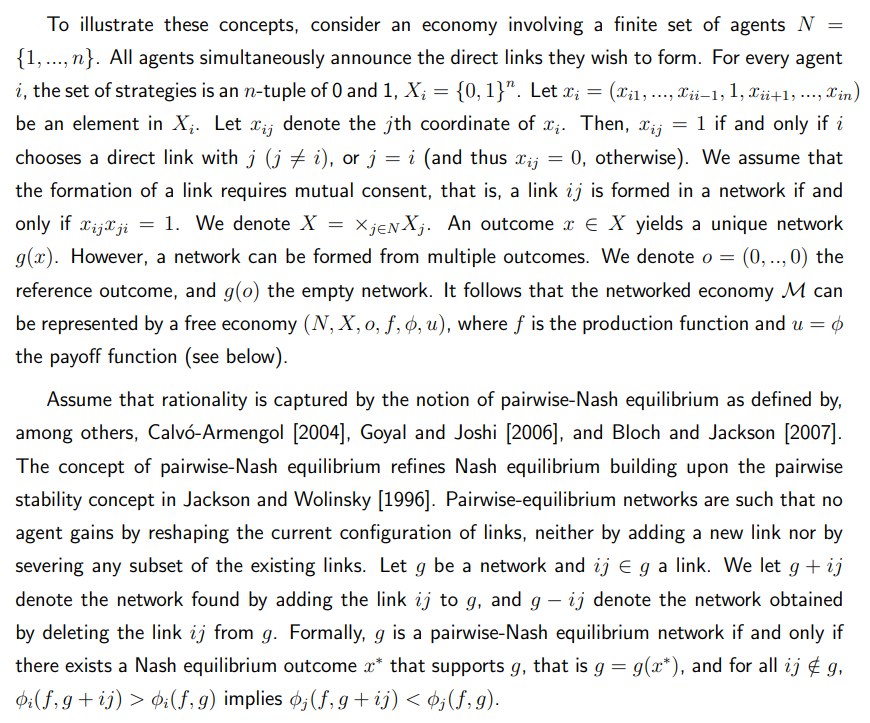
The Ukraine war has reached the limits of what continued fighting can realistically achieve for any of the belligerents. All four principals – the United States, Russia, Ukraine, and the Europeans – have long understood that the conflict’s underlying geopolitical realities would eventually force a negotiated settlement. The question now is no longer whether diplomacy will take over, but when the parties can align their domestic constraints and strategic imperatives to engineer a deal. Yet even a cessation of hostilities will leave unresolved the deeper question of Europe’s long-term security architecture, which the war has exposed and whose conclusion will transform.

Axios reported late Nov 30 that senior U.S. and Ukrainian officials engaged in five hours of “difficult” and “intense” negotiations on the de facto border with Russia, reflecting the strategic reality that Ukraine could not reclaim lost territories and Russia found further gains prohibitively costly, making it inevitable that a line be drawn roughly along the positions both sides have held for some time. The U.S. delegation, led by Special Envoy Steve Witkoff, Secretary of State Marco Rubio, and adviser Jared Kushner, met with Ukraine’s national security adviser Rustem Umerov, military chief of staff Gen. Andrii Hnatov, and deputy head of military intelligence Vadym Skibitskyi. Speaking to reporters, Secretary Rubio emphasized that the discussions were not only about ending the fighting but also about establishing conditions for Ukraine’s long-term prosperity, noting, “I think we built on that today, but there’s more work to be done.” Witkoff and Kushner are now scheduled to travel to Moscow for further talks, including with President Vladimir Putin.

Understanding where these negotiations are headed requires first grasping the strategic situation in the battlespace. The Ukraine war has underscored a fundamental point: Russia is no longer the Soviet superpower but a markedly diminished state. After nearly four years of fighting, Moscow has managed to seize only about 20 percent of Ukrainian territory, a limitation that reveals the structural weaknesses of the Russian military machine. That constraint reverberates through the international system, shaping a moment in which the United States is seeking to limit its exposure to protracted land wars while recalibrating its global commitments.

From Washington’s perspective, Russia no longer represents a direct threat to the United States itself. More to the point, whatever danger Moscow poses to Europe is one America’s allies are increasingly capable of managing on their own. The United States no longer needs to serve as Europe’s primary shield as it has since World War II, because the balance of power on the continent has shifted in favor of the Europeans. This gives Washington room to retrench into a supporting role, reallocating attention and resources to the maritime space, particularly the Western Pacific, which is more central to its long-term strategic interests.

This shift aligns with the emerging U.S. geostrategy that the Trump administration is attempting to translate from concept into practice for managing the wider international system. Under this framework, Washington expects allied and partner states to assume primary responsibility for security in their own regions. The United States envisions itself not as the frontline enforcer but as the architect and supervisor of this reorganized global order. Yet before such a handoff is possible, Washington must first wind down the wars in Ukraine and the Middle East and prevent the eruption of new conflicts such as the brief but destabilizing 87-hour clash between India and Pakistan earlier in May.

From the European perspective, this strategic reorientation is deeply unsettling after eight decades of relying on the United States to carry the bulk of the security burden. Americans enjoy the insulation of the Atlantic, while Europe sits exposed with a direct land frontier abutting Russia. Even if the Donbas, the Azov littoral, and Crimea amount to only a fifth of Ukraine’s territory, Russia’s advances have brought its forces uncomfortably close to the heart of Europe. European leaders therefore fear, reasonably, that once Moscow regenerates its economic and military capacity, it could seek to push westward again.

Therefore, the pressing question for the Europeans is: how do they become net security providers for the Continent? Any change of this magnitude is extremely unsettling; it takes time for states and their publics to recognize and adapt to a new strategic reality. The status quo is familiar and comforting, whereas change introduces uncertainty and risk and can be very messy. This explains the attachment to the old order and the hope that what the Trump administration is doing is not permanent and that things will reset once his term is over.

Wishes aside, European leaders understand that there is no going back to the postwar status quo. They realize that the ball is in their court and that they must develop a new security mechanism for their region. Their biggest challenge toward any form of collective action is that, unlike the United States—a singular sovereign actor—the European Union is a bloc of 27 nation-states, each with its own imperatives and constraints. It was easy for them to follow the American lead, but much harder to reach consensus on a European leadership structure.

NATO functioned effectively largely because the United States served as its organizing principle, institutionalized through the structures of Supreme Headquarters Allied Powers Europe (SHAPE) and the American-led Supreme Allied Commander Europe (SACEUR). European militaries found it far easier to operate under a U.S. commander than under one of their own, which helped suppress historic rivalries. But it is far from clear that British forces would accept orders from a French general, or that the French would submit to German command, once the American anchor is removed. Complicating matters further are rising regional powers such as Poland and the broader Intermarium states, whose proximity to Russia gives them a far more acute threat perception than their Western European counterparts.

Despite their shared influence, the EU3 diverge sharply in strategic priorities, capabilities, and geopolitical outlook, reflecting fundamentally different national trajectories and threat perceptions. The United Kingdom, having left the European Union five years ago, continues to navigate a strategic balance between its deep alignment with the United States and ties to the continental bloc. Because of Brexit, France stands alone among EU members as a nuclear-armed power, cementing its role as Europe’s strategic counterweight. Meanwhile, Germany, Europe’s largest economy, is leveraging its economic heft to execute a historic military modernization – expanding budgets, upgrading forces across all domains, and positioning the Bundeswehr as the continent’s central security anchor under Chancellor Friedrich Merz.

Germany’s deployment of a brigade-sized force—including mechanized infantry, armored vehicles, and air-defense units—to Lithuania marks the country’s first permanent overseas military presence since World War II. The move represents a historic recalibration of Berlin’s military posture, signaling a willingness to assume frontline responsibilities on NATO’s eastern flank. At the same time, it revives deep historical anxieties, challenges constitutional and domestic norms, and tests the limits of public tolerance for an assertive German military. This deployment highlights the strategic tightrope Germany must walk: projecting credible deterrence against Russia while managing enduring European fears of German domination on the Continent.

As the United States signals a strategic retrenchment, European states are increasingly pursuing unilateral security initiatives to safeguard their national interests. This response is natural, since acting independently is far easier than building a truly collective framework, which would require substantial revamping of both NATO and the European Union. More importantly, these national initiatives can undermine a coordinated European defense posture capable of deterring Russia. Ultimately, Europe must reconcile these unilateral moves into a coherent collective security arrangement if it hopes to project credible strength and stability in an increasingly contested strategic environment.

The Trump White House will need to engage European allies in a deliberate process to design a new security architecture in which they move from secondary to primary responsibility for their own regions. Washington cannot simply step back; it must define clearly what this role reversal entails in practical terms: command structures, force commitments, intelligence-sharing, and rapid-response mechanisms. The United States’ task will be to provide guidance, oversight, and strategic calibration while allowing allies to assume greater operational autonomy. Success will hinge on translating conceptual shifts into concrete, executable arrangements that ensure both European credibility and continued transatlantic cohesion.

Source: https://www.forbes.com/sites/kamranbokhari/2025/12/01/as-ukraine-war-nears-its-end-europe-faces-strategic-security-dilemma/


Disclaimer: The articles reposted on this site are sourced from public platforms and are provided for informational purposes only. They do not necessarily reflect the views of MEXC. All rights remain with the original authors. If you believe any content infringes on third-party rights, please contact service@support.mexc.com for removal. MEXC makes no guarantees regarding the accuracy, completeness, or timeliness of the content and is not responsible for any actions taken based on the information provided. The content does not constitute financial, legal, or other professional advice, nor should it be considered a recommendation or endorsement by MEXC.

You May Also Like

The Urgency Index: BullZilla “Sell-Out Clock” Is the Hottest Metric in Best Crypto to Buy Now as XRP and Cardano Stable

The Urgency Index: BullZilla “Sell-Out Clock” Is the Hottest Metric in Best Crypto to Buy Now as XRP and Cardano Stable

What if the best crypto to buy right now wasn’t a top-20 coin, but a presale project exploding so fast that stages flip every 48 hours, or sooner if $100,000 pours in? That’s exactly what’s happening with the BullZilla presale, now considered one of the most explosive launches of 2025. While the broader market gains momentum, BullZilla crypto is moving at an unmatched speed, triggering intense FOMO and attracting early investors seeking massive upside. The BZIL presale is built on a unique stage progression system that rewards early buyers with massive ROI. BullZilla coin buyers in Stage 13 have already seen ROI boosts exceeding 1,500% against its listing price. This performance alone secures BullZilla’s status among the best crypto to buy right now, combining scarcity, narrative-driven branding, and deflationary mechanics that mimic the success arcs of previous 1000x meme tokens. Even as XRP jumps and Cardano holds firm, BullZilla price action continues to dominate investor conversations. The presale tally has crossed $1 million, over 3,600 holders, and more than 32 billion BZIL tokens sold. Meanwhile, staged increases, such as the jump from $0.00032572 to $0.00033238, demonstrate that early buyers benefit instantly. It’s no surprise that traders repeatedly call BullZilla the best crypto to buy right now, driven by its high-energy presale momentum. BullZilla Presale: The New Gold Standard for Early-Stage ROI The BullZilla presale is engineered to reward urgency. With price increases locked every 48 hours or once each stage hits $100,000, investors find themselves in a high-adrenaline race to secure tokens before the next price bump. This structure alone elevates BZIL into the category of the best crypto to buy right now, particularly for anyone who understands how early-stage tokenomics create exponential returns. The Urgency Index: BullZilla "Sell-Out Clock" Is the Hottest Metric in Best Crypto to Buy Now as XRP and Cardano Stable 4 BullZilla price has been rising with precision and consistency. From earlier phases to Stage 13, early supporters witnessed 5,564.69% ROI, proving that entry timing is everything. Beyond ROI, scarcity ensures long-term value. Token burns are hard-coded into supply mechanics, with each burn tightening the supply and increasing token desirability. Combined with active staking, referral bonuses, and cinematic branding, BullZilla crypto surpasses traditional presales and justifies its title as the best crypto to buy right now for high-growth seekers. As bullish sentiment rises across the market, BZIL presale stands out as the project moving with the greatest velocity. Its ability to generate organic hype without relying on artificial inflation or paid influencer campaigns further solidifies its reputation as the best crypto to buy right now. Scarcity, Burns & Stage 13B: BullZilla’s Formula for Explosive Gains One of BullZilla’s most powerful catalysts is the scarcity baked into its tokenomics. Stage 13B, priced at $0.00033238 is witnessing rapid depletion, with less than 90,000 tokens remaining. Over 666,666 tokens have already been burned, proving that BullZilla’s deflationary mechanics are not theoretical, they are actively shaping supply and investor expectations. As supply shrinks and demand accelerates, BullZilla coin naturally strengthens its position as the best crypto to buy right now, especially for investors seeking tokens with built-in scarcity. Historically, meme coins with aggressive burn structures have outperformed expectations (e.g., SHIB’s early surge), and BullZilla crypto mirrors this pattern with even tighter presale controls. The storytelling aspect of BullZilla also amplifies its appeal. Unlike generic meme coins, BZIL introduces stage names like Zilla Sideways Smash, a branding strategy that enhances memorability and community engagement. This narrative construction makes investors feel connected to the project’s progression, increasing loyalty and enthusiasm. With each price surge, burned token event, and presale milestone, BullZilla adds another layer to its identity, strengthening its claim as the best crypto to buy right now. XRP ($XRP): Strong Momentum, But Still Overshadowed by BullZilla’s Presale Pace XRP has recorded a 7% jump, reaching $2.19 in the last 24 hours. Momentum is strong, fueled by positive sentiment and increased inflows of liquidity. For traditional crypto traders, this is encouraging, but compared to the explosive movement in the BullZilla presale, XRP’s pace appears more stable than aggressive. XRP remains a reliable asset backed by institutional interest and large-scale adoption. It has strong fundamentals, a resilient community, and long-term relevance in the payments sector. However, XRP’s growth curve is steady rather than exponential. When compared to BullZilla coin’s rapid-staging price increases, XRP doesn’t deliver the immediate high-risk, high-reward opportunity that traders seeking the best crypto to buy right now often chase. XRP is strong, but it is not multiplying investor capital at the same speed as BZIL presale. The difference is simple: XRP grows with utility and market cycles, while BullZilla grows through staged presale mechanics designed to maximize early ROI. Cardano (ADA): Stability, Expansion, and Slow-Building Growth Cardano trades with consistent performance, driven by ongoing ecosystem development and staking participation. Its layered blockchain architecture and research-focused roadmap keep it positioned as a dependable long-term investment. ADA remains one of the most academically respected blockchains in the world. But the challenge for Cardano is time. Its growth is slow, steady, and fundamentally driven, not explosive. For investors prioritizing immediate gains or early-stage risk plays, ADA cannot compete with the energy, scarcity mechanics, and stage-based ROI of the BullZilla presale. While ADA is excellent for holding, staking, and long-term stability, it lacks the rapid movement that makes BullZilla the best crypto to buy right now. Cardano is a backbone asset in any diversified portfolio. But for traders looking for a high-octane opportunity where small capital can generate exponential growth, BullZilla price action remains unmatched. How to Join BullZilla Before Stage 13C Hits For investors ready to enter one of the best crypto to buy right now, the steps are simple: Visit the official BullZilla presale portal.Connect your Web3 wallet.Purchase BZIL using ETH, USDT, or card. Stake immediately to earn rewards. Use referral codes for up to 10% bonuses. With stages progressing rapidly, timing is crucial. Each delay risks entering at a higher BullZilla price, reducing overall token allocation and potential ROI. The Urgency Index: BullZilla "Sell-Out Clock" Is the Hottest Metric in Best Crypto to Buy Now as XRP and Cardano Stable 5 Conclusion: BullZilla Dominates the Market Conversation The crypto market is gaining momentum, but no project is generating more excitement than the BZIL presale. With explosive early-stage ROI, rapid stage progression, token burns, scarcity mechanics, and narrative-driven hype, BullZilla crypto stands alone as the best crypto to buy right now for investors seeking exponential returns. XRP is climbing, Cardano remains fundamentally strong, but neither matches BullZilla’s presale velocity. With a price of $0.00033238, over 32 billion tokens sold, 3,600+ holders, and millions raised, the BullZilla presale is quickly becoming the most-watched meme coin launch of 2025. If you’re looking for the best crypto to buy right now, the window to enter BullZilla before Stage 13C is closing fast. The Urgency Index: BullZilla "Sell-Out Clock" Is the Hottest Metric in Best Crypto to Buy Now as XRP and Cardano Stable 6 For More Information:  BZIL Official Website Join BZIL Telegram Channel Follow BZIL on X  (Formerly Twitter) Summary The article spotlights BullZilla as the breakout opportunity in the crypto market, emphasizing the explosive momentum of the BZIL presale, which is already accelerating through stages that shift every 48 hours or once $100,000 is raised. Investors are urged to join the earliest round to secure the highest possible gains before prices increase. Alongside BullZilla, the article compares XRP and Cardano, but reinforces that BullZilla’s early–stage mechanics create a uniquely powerful setup for rapid growth. Throughout the piece, the phrase “best crypto to buy right now” is repeatedly positioned to establish BZIL as the top contender in the current market, supported by hype-driven analysis of BullZilla price potential, BullZilla crypto appeal, and the expanding excitement around the BZIL presale Read More: The Urgency Index: BullZilla “Sell-Out Clock” Is the Hottest Metric in Best Crypto to Buy Now as XRP and Cardano Stable">The Urgency Index: BullZilla “Sell-Out Clock” Is the Hottest Metric in Best Crypto to Buy Now as XRP and Cardano Stable
Share
Coinstats2025/12/08 02:15